WELCOME TO FANGDA ELECTRIC MACHINE CO..LTD



Understanding Induction Motors: Essential Insights for Electrical Professionals
Aug 15,2026
Induction motors, a type of alternating current (AC) motor, are widely used in industrial settings due to their robustness and simplicity. The fundamental operation of these motors relies on electromagnetic induction, where an electric current is induced in the rotor by a rotating magnetic field generated by the stator. This principle makes induction motors highly efficient for transforming electr

Induction motors, a type of alternating current (AC) motor, are widely used in industrial settings due to their robustness and simplicity. The fundamental operation of these motors relies on electromagnetic induction, where an electric current is induced in the rotor by a rotating magnetic field generated by the stator. This principle makes induction motors highly efficient for transforming electrical energy into mechanical energy.
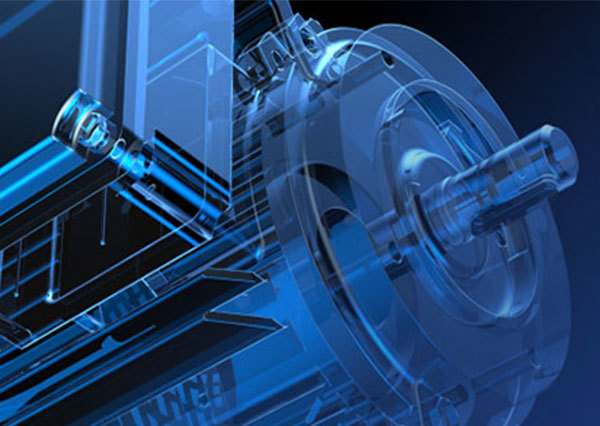
One of the significant advantages of induction motors is their ability to start under load without requiring a separate starting mechanism. This feature is particularly beneficial in applications where high torque is needed at startup, such as in conveyor systems or pumps. Additionally, their construction is straightforward, usually comprising a stator, rotor, and bearing supports, which minimizes maintenance needs and enhances longevity.
When discussing induction motors, it’s essential to consider their efficiency ratings, which can significantly impact energy consumption. High-efficiency induction motors can result in substantial savings over time, especially in large-scale applications. The efficiency of these motors can be influenced by factors such as the design of the rotor and stator, the quality of materials used, and the operating conditions.
Another critical aspect is the classification of induction motors based on phase supply. Single-phase induction motors are commonly used in household appliances and lighter applications, while three-phase induction motors are prevalent in industrial environments due to their higher efficiency and power capabilities. Understanding the differences between these types is crucial for selecting the right motor for specific applications.
Moreover, induction motors can be controlled using various methods, including variable frequency drives (VFDs), which allow for the adjustment of speed and torque according to the operational requirements. Implementing VFDs can lead to enhanced performance and energy savings, making them a popular choice in modern industrial processes.
It's also worth noting that while induction motors are generally reliable, they are not immune to issues. Common problems include overheating, bearing failures, and electrical faults, which can disrupt operations and lead to costly downtimes. Therefore, regular maintenance and monitoring are essential to ensure optimal performance.
In conclusion, induction motors are a cornerstone of industrial power generation and electrical applications. Their operational efficiency, ease of maintenance, and adaptability make them a preferred choice for many professionals in the field. Understanding these motors' intricate details can help ensure optimal performance and longevity, ultimately benefiting operational outcomes in any electrical setting.
One of the significant advantages of induction motors is their ability to start under load without requiring a separate starting mechanism. This feature is particularly beneficial in applications where high torque is needed at startup, such as in conveyor systems or pumps. Additionally, their construction is straightforward, usually comprising a stator, rotor, and bearing supports, which minimizes maintenance needs and enhances longevity.
When discussing induction motors, it’s essential to consider their efficiency ratings, which can significantly impact energy consumption. High-efficiency induction motors can result in substantial savings over time, especially in large-scale applications. The efficiency of these motors can be influenced by factors such as the design of the rotor and stator, the quality of materials used, and the operating conditions.
Another critical aspect is the classification of induction motors based on phase supply. Single-phase induction motors are commonly used in household appliances and lighter applications, while three-phase induction motors are prevalent in industrial environments due to their higher efficiency and power capabilities. Understanding the differences between these types is crucial for selecting the right motor for specific applications.
Moreover, induction motors can be controlled using various methods, including variable frequency drives (VFDs), which allow for the adjustment of speed and torque according to the operational requirements. Implementing VFDs can lead to enhanced performance and energy savings, making them a popular choice in modern industrial processes.
It's also worth noting that while induction motors are generally reliable, they are not immune to issues. Common problems include overheating, bearing failures, and electrical faults, which can disrupt operations and lead to costly downtimes. Therefore, regular maintenance and monitoring are essential to ensure optimal performance.
In conclusion, induction motors are a cornerstone of industrial power generation and electrical applications. Their operational efficiency, ease of maintenance, and adaptability make them a preferred choice for many professionals in the field. Understanding these motors' intricate details can help ensure optimal performance and longevity, ultimately benefiting operational outcomes in any electrical setting.


Contact
E-mail :
Tel/ WhatsApp:
Address:
Daxi Industrial District, Daxi Town, Wenling City, Zhejiang, China
Daxi Industrial District, Daxi Town, Wenling City, Zhejiang, China
